With the introduction of blast furnaces in the 15th
century the availability of wrought iron increased. The earliest wrought
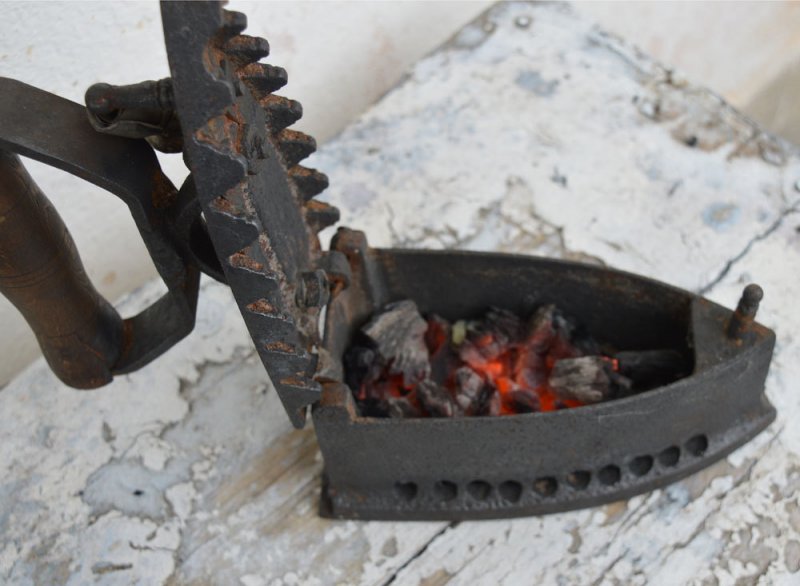
iron is known as 'charcoal iron', a highly carburised form of iron which was
made by constant reworking in the fire.
Early processes of obtaining iron from its ore (iron oxide with various
impurities) required heating the ore with a substance that had a high carbon
content, such as charcoal, in small furnaces called 'bloomeries'. As
temperatures within the furnace increased, the ore began to release oxygen
and the charcoal released carbon. These two elements then combined to form
carbon monoxide. The charcoal reduced the iron oxide to iron, giving off
carbon monoxide in the process, leaving behind a spongy mass of iron. If the
temperature was allowed to rise, this mass would absorb small amounts of
carbon, forming wrought iron.
After smelting, the 'blooms' of iron were forged by heating and then
beating them out into long bars. After that, each bar was cut into shorter
length, bundled together and reforged. The process was repeated many times.
With each forging, more of the slag was removed, and the fine residues left
behind became integrally incorporated with the iron, together forming the
unique fibrous microstructure which gives wrought iron its tensile strength.
Charcoal iron contained impurities, mostly in the form of silica or
carbides. Iron silicate is it's predominant impurity. The silicate gave the
charcoal iron more workability. This allowed the blacksmiths to create
ironwork which just cannot be accomplished with modern iron and steel.
Charcoal iron sheet is soft and ductile, when tempered, so that a good
depth of cold working and sharp detail is possible without cracking and it
can withstand corrosion for hundreds of years.