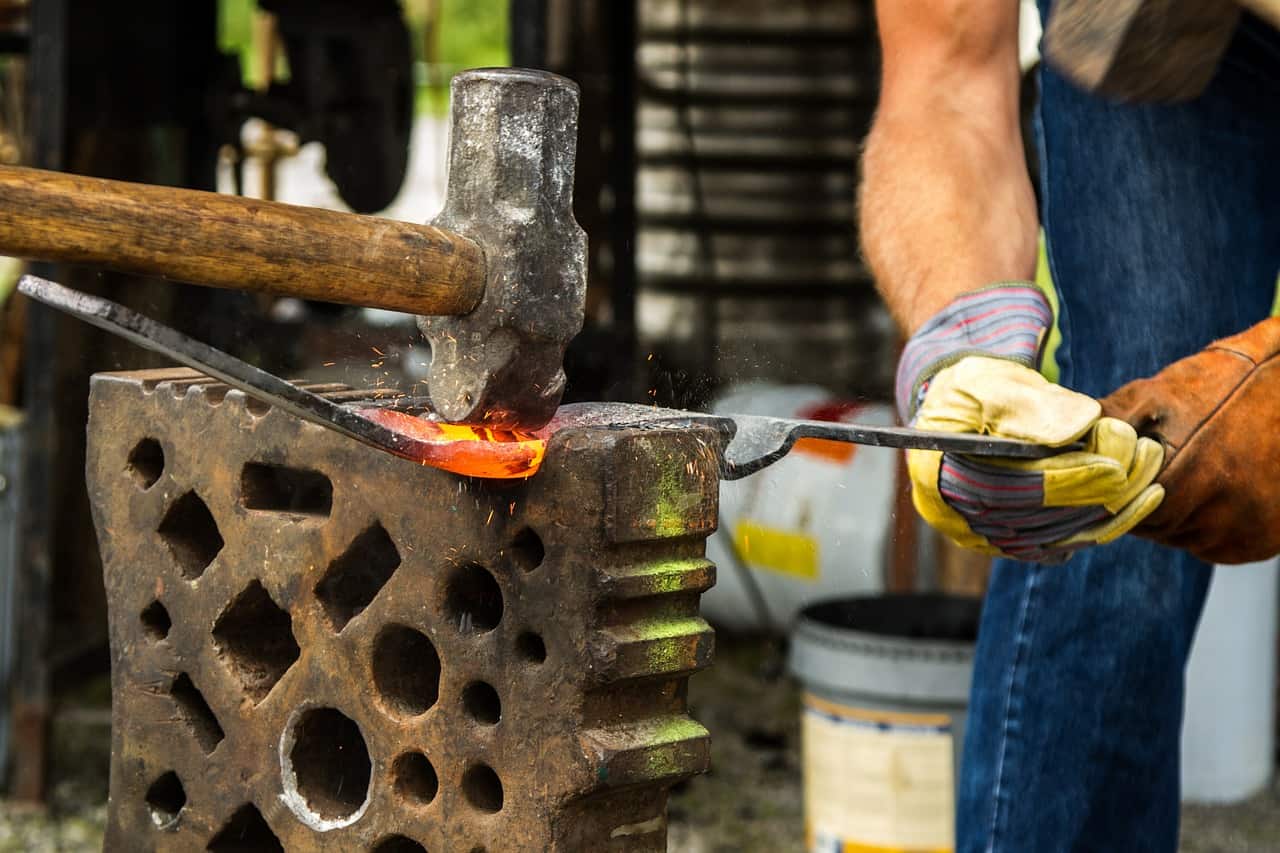
Blacksmithing dates from the earliest Iron Age, which
started about 1500 BC or earlier in Central Asia. Many of the metal working
tools and techniques of the blacksmith date from the earlier times of the
Bronze Age going back over 5,000 years.
Blacksmithing is an ancient profession. Many cultures have mythical
figures, such as the Norse god Thor, who were blacksmiths. Blacksmithing is
more than forging iron products. Many blacksmiths doubled as farriers,
people who shoe horses, mules, and oxen. In addition to making useful tools,
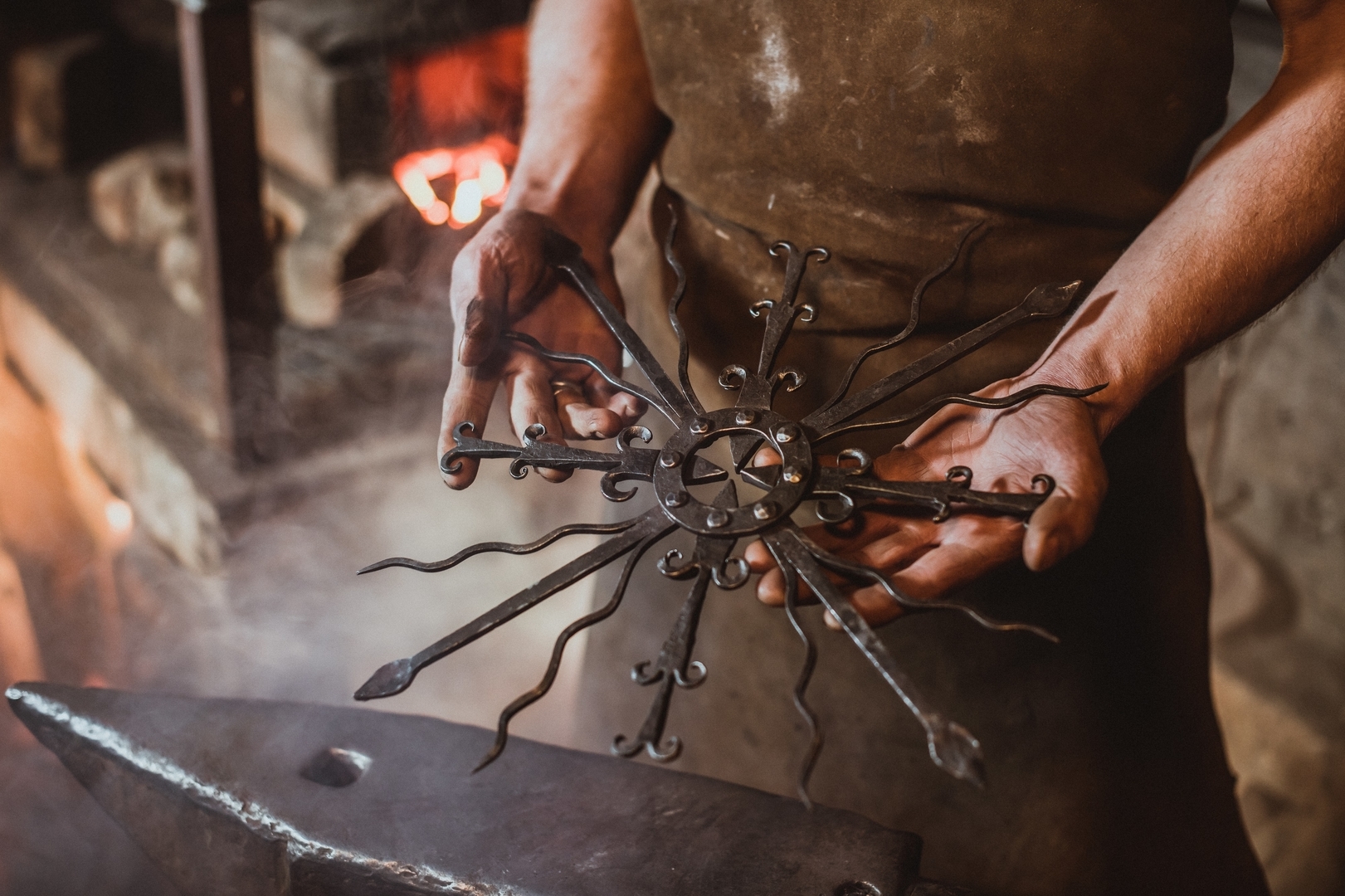
some blacksmiths also make decorative pieces, such as fancy candle holders
and iron gates.
The title "blacksmith" was originally given to a person who
worked the black metal. Black metal was the former name for iron. Iron is a
basic element on the periodic table and the fundamental material of the
blacksmith.
It is not surprising that the periods of history are referred to by the
name of metals, like, The Iron Age, The Copper Age and The Bronze Age. Men
have been processing metal for their use since the dawn of recorded history.
It can be stated that Blacksmithing, the art of creating that crude metal
into a useable implement has been around for a very long time. The Iron Age
favored cultures skilled in the craft of black smithing. This is not a craft
that can be copied by machines.
Commercialization of the craft
Blacksmithing usually is regarded as a quaint throwback to
pre-industrialization, preserved by a few diehards and hobbyists. However,
if the activity on Blacksmithing Web sites is any indication, the craft is
alive and growing. Industrialization enforced new requirements for design,
strength and accuracy. The carefree blacksmith has become a technician.
In today's economic context, Blacksmiths will not see any downturns, since,
the custom market which holds a major share in the industry, is driven
by the top end of the economy, and they are relatively unaffected by market
fluctuations.'
Today a blacksmith's work can be broken info three basic categories:
- Traditional ironwork
- Architectural ironwork &
- Sculpture
Traditional ironwork mainly consists of horseshoeing and artifacts,
which are produced mostly by blacksmiths, who use primitive tools and
methods of production. Professional, traditional blacksmiths often have a
following of clients in the fine crafts market and huge demand in the
industry. Architectural blacksmiths also have a limited but strong market in
the commercial as well as, in the custom housing industry where they can
offer hand-forged work or a hybrid, containing hand-forged elements in a
fabricated piece.
Industrial blacksmiths operating huge forging machines or drop hammers have
largely replaced the individual blacksmith. However, small smiths still
produce some items in the thousands including tools and decorative objects.
The Blacksmith Craft & Wrought Iron
Blacksmiths work either the old ductile wrought iron or modern steel.
Wrought iron is the product of early iron furnaces called bloomers. Wrought
iron has no carbon and cannot be hardened. Wrought iron contains thin layers
of silica slag that give it a wood grain like property. It is no longer
manufactured but old scrap wrought is sought out by blacksmiths and
recycled.
Modern blacksmiths produce a wide range of items including wrought iron
craft items, architectural railings, furniture etc